It's Not Just Photos: What You Can Digitize
When people think about digitizing family memories, they usually think of loose photos or old home movies.
And yes, those are important.
But they are only part of the story.
You may have shelves, boxes, albums, envelopes, and closets full of memories that could be preserved digitally. It's not just photos and videos, but also scrapbooks, slides, negatives, letters, journals, audio cassette tapes, film reels, and more that can (and should) be digitized.
If it tells part of your family’s story, it may be worth digitizing.
What Can You Digitize Besides Photos?
A lot more than most people realize.
Depending on the format and condition, you may be able to digitize:
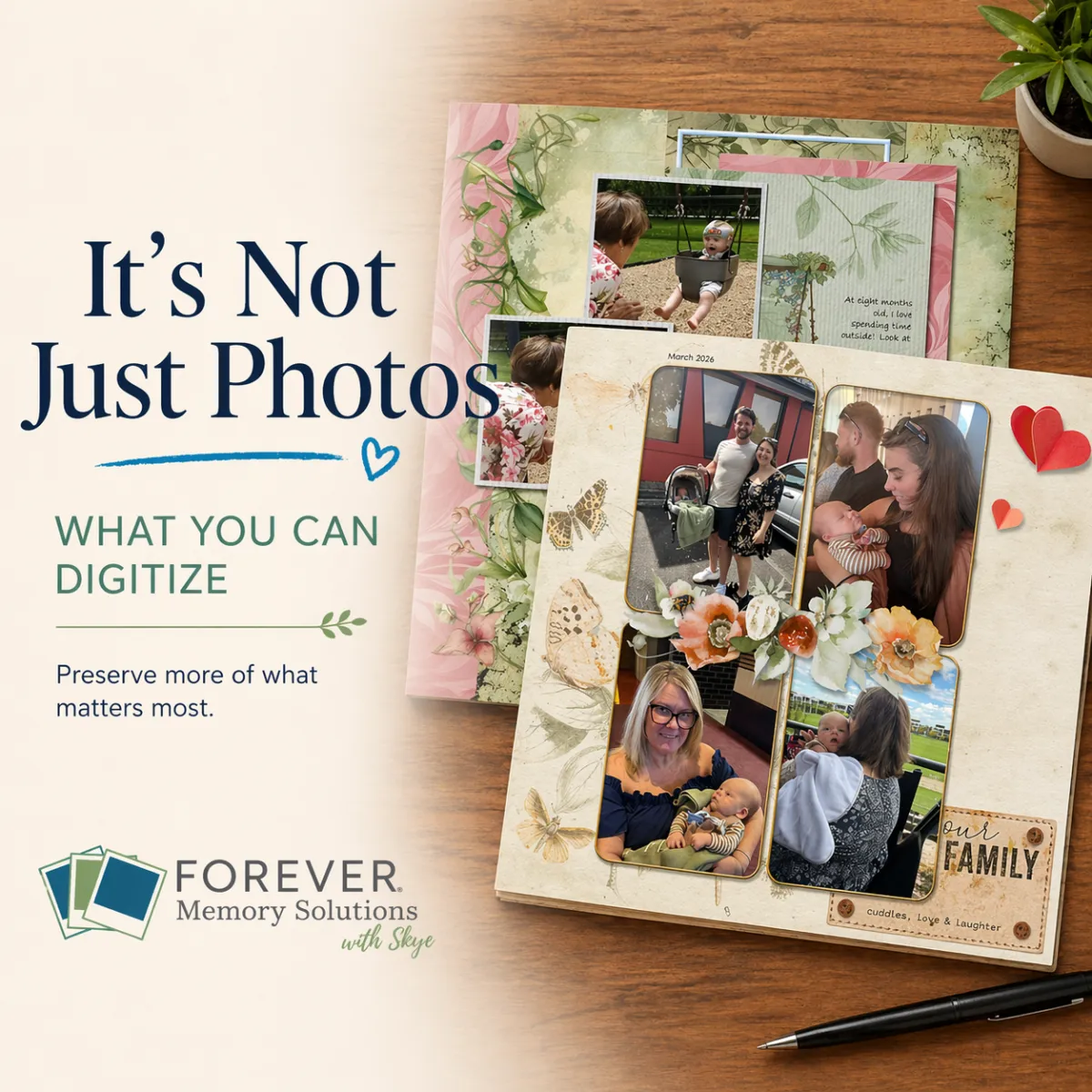
Scrapbooks and scrapbook pages
Photo albums
Loose printed photos
Slides and negatives
VHS tapes and camcorder tapes
Film reels
Audio cassette tapes
Letters, journals, and handwritten notes
Recipe cards
Certificates, programs, and newspaper clippings
Kids’ artwork and school papers
Family history documents and keepsakes
Some memories are pictures. Some are videos. Some are voices. Some are handwriting. Some are already gathered into albums that tell a story from beginning to end.
Digitizing helps make those memories easier to protect, share, and enjoy.
Scrapbooks Are One of the Best Places to Start
Scrapbooks are one of my favorite examples of what can be digitized because they already have so much meaning built in.
A scrapbook is not just a stack of photos.
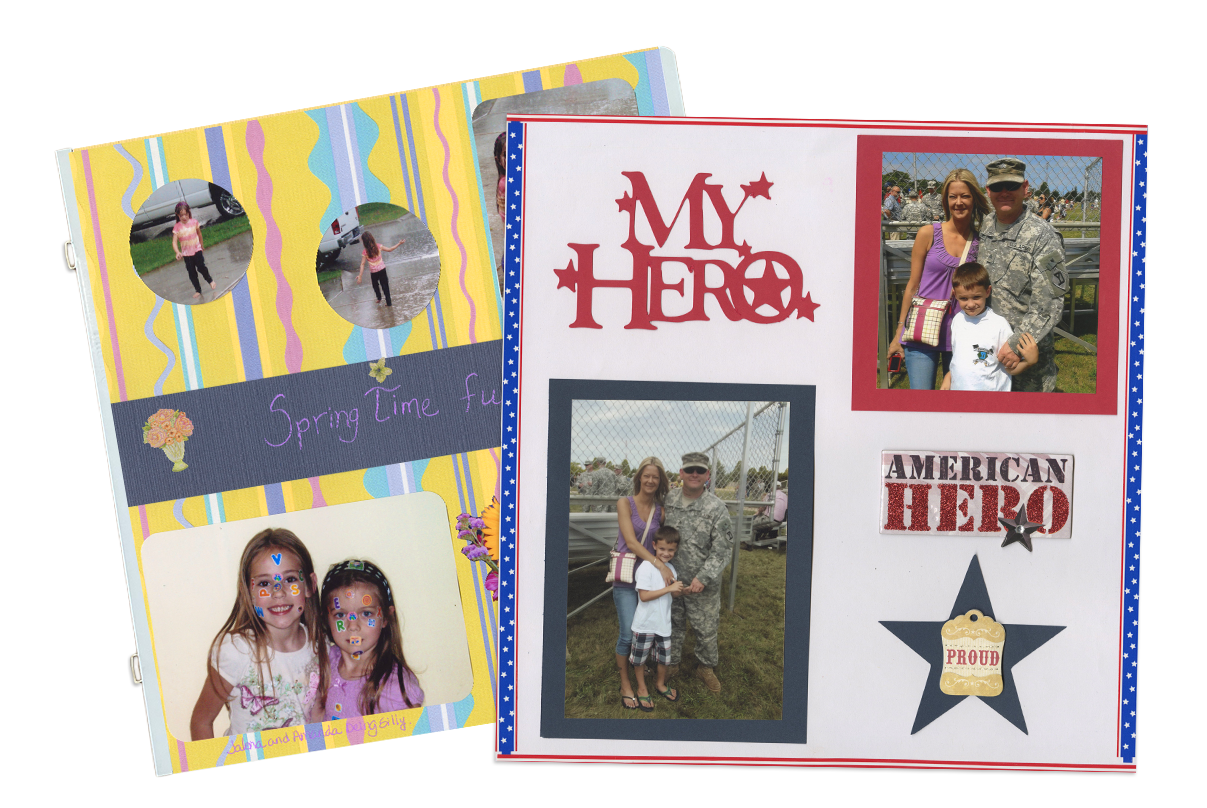
It often includes:
Handwritten journaling
Names and dates
Ticket stubs, programs, and memorabilia
Captions and stories
Decorative details that show personality and time period
Photos arranged in a meaningful order
That context matters.
When you digitize a scrapbook, you are not just saving the individual pictures. You are preserving the way the story was originally told.
The order of the pages, the handwriting, the captions, and the little details all become part of the preserved memory.
Why Digitizing Scrapbooks Matters
Many scrapbooks are fragile.
Pages can yellow. Adhesive can fail. Photos can fade. Albums can become bulky, heavy, or hard to share with family.
And sometimes, there is only one copy.
Digitizing scrapbooks gives you a digital version that can be enjoyed without handling the original over and over again. It also makes it easier to share those memories with children, siblings, cousins, and future generations.
The original scrapbook still matters. But having a digital copy gives you peace of mind.
Don’t Forget the Voices
Photos show us faces and places, but audio recordings preserve something different: voices.
Old audio cassette tapes may include:
Family interviews
Messages from loved ones
Music recitals
Oral histories
Church talks or speeches
Everyday moments that were recorded years ago
Hearing someone’s voice can be incredibly powerful, especially after they are gone.
That is why audio cassette tapes are worth including when you are thinking about what to digitize.
A Simple Way to Decide What to Digitize First
If you feel overwhelmed, don’t start with everything.
Start with one category.
Ask yourself:
What would I be heartbroken to lose?
What is most fragile?
What would my family enjoy seeing or hearing?
What tells a story that is not written anywhere else?
What do I only have one copy of?
For many families, scrapbooks are a great starting point because they already combine photos, stories, dates, and personality in one place.
What Happens After You Digitize?
Digitizing is an important first step — but the next question is just as important:
Where will those digital files go?
Once your memories are digitized, you will want them stored somewhere safe, organized, and easy to access. That way, they are not just sitting on a flash drive, an old computer, or a temporary download link.
This is where permanent storage matters.
With FOREVER Storage®, your digitized memories can be kept in one safe place, organized into albums, shared with family, and preserved for the future.
Final Thought
Digitizing is not only for loose photos and old videos.
It can also be for the scrapbook your mom made, the cassette tape with Grandpa’s voice, the slides in the closet, the letters in a box, or the recipe cards written in familiar handwriting.
Your family’s story may be tucked into more places than you realize.
And preserving it now means it will be easier to share, enjoy, and pass on later.