

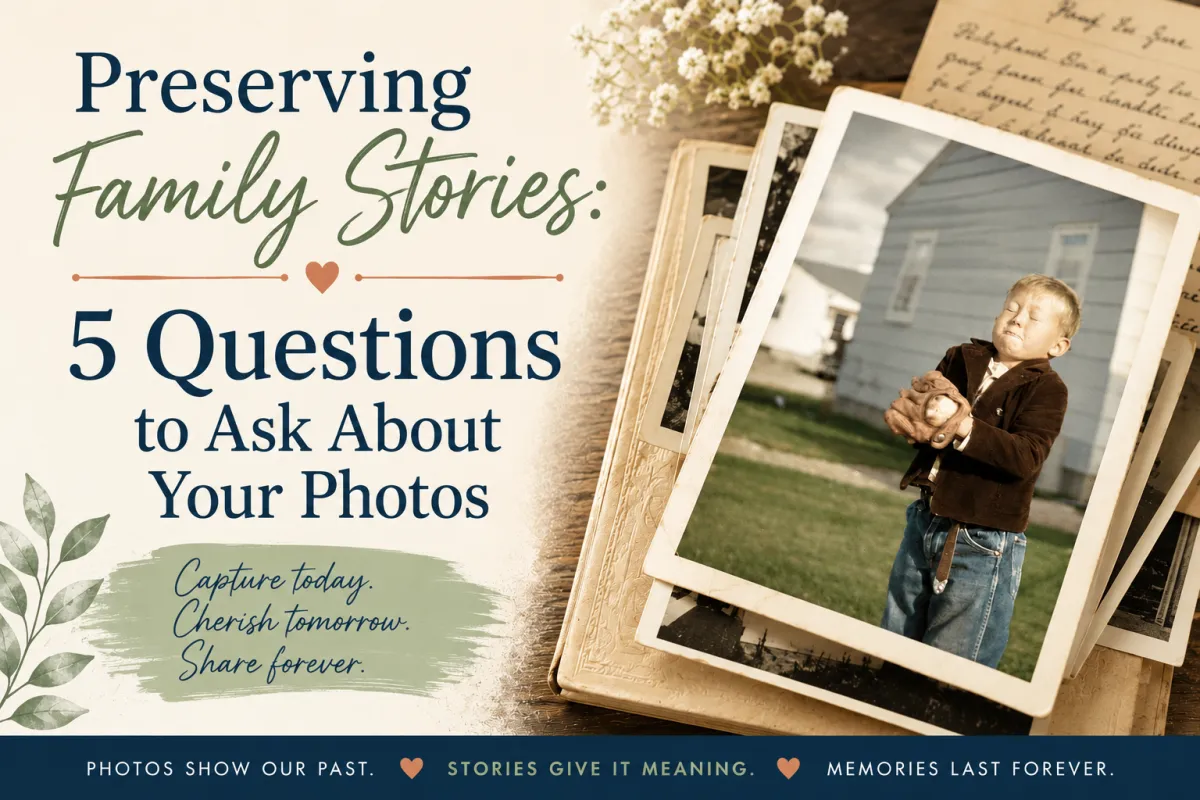
Preserving Family Stories: 5 Questions to Ask About Your Photos
When we think about family history, we often think about the big things—births, weddings, military service, careers, moves, and other major milestones.
But family history is also made up of the little stories.
The Sunday dinners at Grandma’s house. The vacation when everything went wrong but everyone still laughs about it. The way your dad always stood behind the camera instead of being in the pictures. The recipe your mom made every Christmas. The nickname nobody outside the family would understand.
Those everyday details may not seem especially important while we're living them. But years from now, they may be exactly the things someone wishes they knew.
Preserving family stories means saving more than photos and dates. It means recording the people, places, details, and experiences that give our family memories meaning. Even a few sentences added to a photo today can preserve information that might otherwise be lost to future generations.
A Photo Can Show What Happened—but Not Always the Story
Think about some of the older photos you've inherited.
You may recognize the people in them—or maybe you don't. You might know approximately when the photo was taken, but have no idea where they were or why everyone was gathered together.
Now think about your own photos.
Would someone looking at them 50 years from now understand the story?
We take more photos than ever, but many of them are sitting on our phones or computers with very little information attached to them. The photo itself preserves the image. The story gives it meaning.
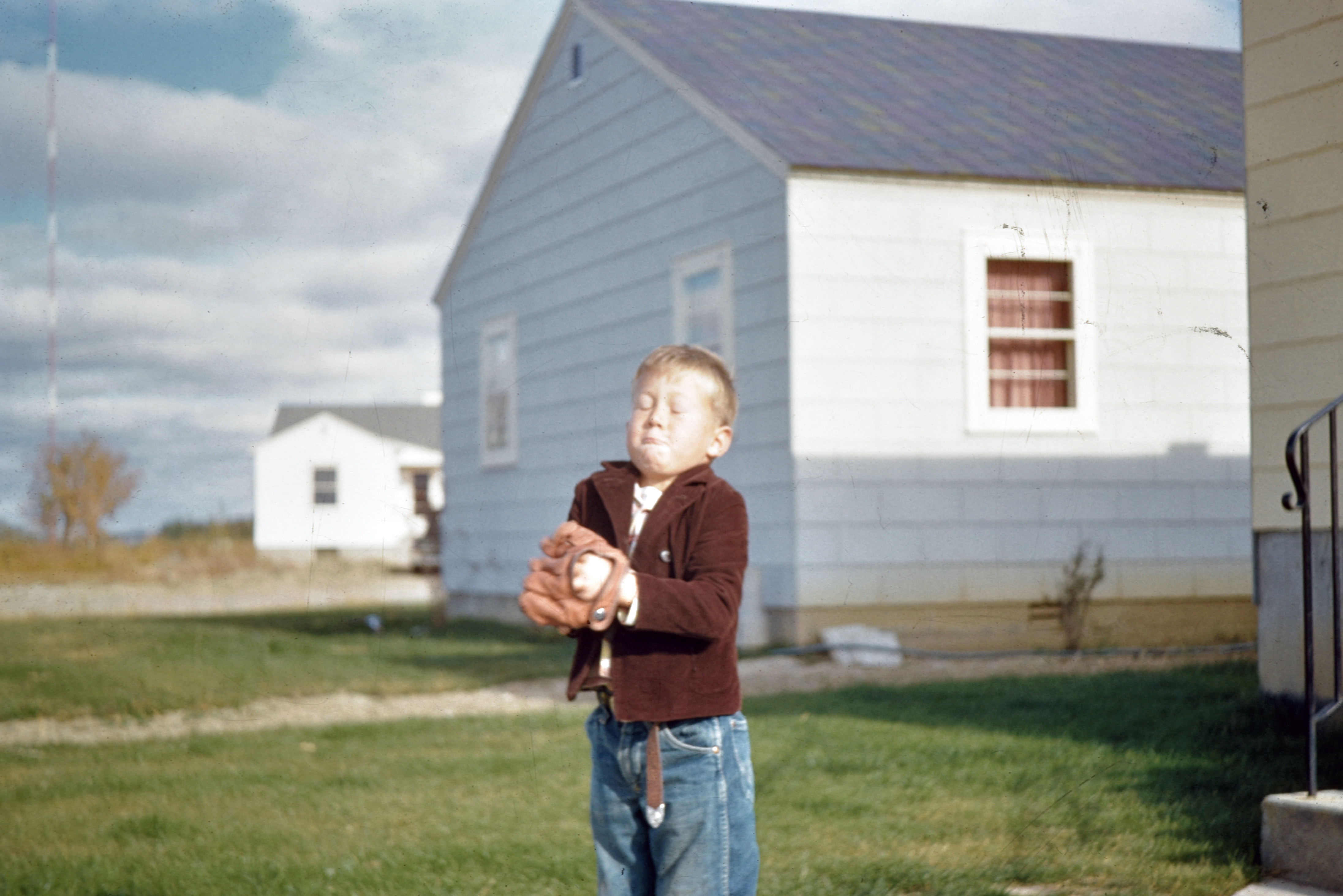
I have this photo of my dad as a little boy, standing outside with a baseball glove, apparently catching a ball. I love the picture—but I wish I knew the story that went with it.
How old was he? Where was he? Who was playing catch with him? Who was behind the camera? Did he love baseball? Was this a special occasion, or simply an ordinary afternoon that someone happened to photograph?
I may never know those answers.
And that's exactly why adding stories to our photos today matters. The details that seem obvious to us now won't always be obvious. A few sentences recorded today can answer questions our children, grandchildren, and great-grandchildren may otherwise be left wondering about someday.
You don't need to write a lengthy journal entry for every photo. Even a few sentences can help preserve family memories and information that might otherwise disappear.
How Do You Preserve the Story Behind a Photo?
A simple way to preserve the story behind a family photo is to answer five questions: Who, What, When, Where, and Why.
You don't need to have every answer. Record what you know now.
WHO?
Who is in the photo? Don’t assume future generations will know. Use names rather than “Mom” or “Grandma,” since those relationships won’t be clear later.
WHAT?
What was happening? Was it a birthday, vacation, ordinary afternoon, family tradition—or something else?
WHEN?
When did it happen? An exact date is wonderful, but even "summer 1987" or "around 1972" is helpful.
WHERE?
Where were you? Include the name of the house, town, school, vacation spot, or other location if you know it.
WHY?
Why does this memory matter? What makes you smile when you see it? What happened before or after the picture was taken? What would you want someone else to know about this moment?
That last question is often where the real family history lives.
Everyday Moments Are Family History, Too
You don't have to wait until you find an important historical photograph to start preserving family stories.
Choose a photo from this week—or make a point to take one. Even your ordinary, everyday activities are worth capturing. What feels mundane now is often what makes our lives most interesting later.
Who is in it? What were you doing? Why did you take it? What was going on in your life that isn't obvious from the picture?
Add a description to the photo, write the story in your memory-keeping system, or record your thoughts somewhere they can stay connected to the memory.
Someday, one of those seemingly ordinary photos may become someone's treasure.
The photos we save show our families what life looked like. The stories we add help them understand what it felt like.