The Things We Didn’t Know We Were Recording
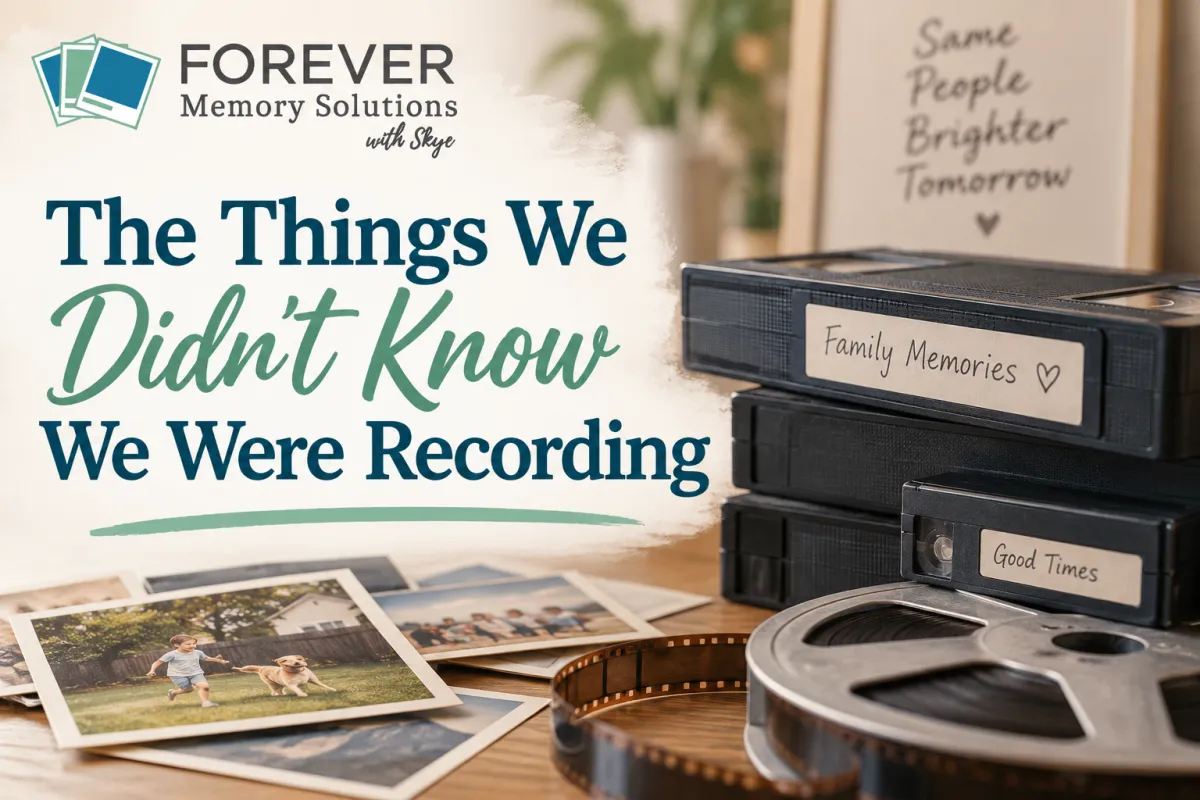
A while ago, I had some of our family's old home movies digitized.
I knew there would be things on those tapes that I wanted to see again. What I didn't expect was how much I would notice beyond the actual events that had been recorded.
One of my favorites isn't a birthday, Christmas morning, or major family milestone.
It's a tour of our house.
My dad apparently decided in 1986 that our house deserved its own video production. And knowing my dad, a simple walkthrough wasn't quite enough.
He enjoyed playing around with video editing, so the tour has opening credits, background music (the instrumental soundtrack from Back to the Future), and my dad narrating the whole thing.
It's a little corny.
And I absolutely love it.
It's Not Really About the House
The house itself is incredibly meaningful to me.
We moved there when I was in kindergarten, and it was my home until I left for college. But there's another reason it matters so much.
My dad built it.
And when I say he built it, I don't mean that he hired someone to build a house.
He built it.
He designed it. He did the carpentry and woodwork. He did the plumbing and electrical work. He built cabinets and built-ins. The house was filled with little details my parents had thought through and created.
There was a wood box next to the fireplace that could be filled from outside, so we didn't have to carry firewood through the house.
He built an entertainment center into the room.
There was a built-in gas barbecue.
He even hid the pantry behind doors that sat flush with the wall. There were no knobs or handles—you pushed on the doors, and they popped open, then pushed them again to latch them closed.
My brother and I even had "Pooh Corners" (little cubby play spaces) accessible from our bedrooms. The Pooh Corners connected to each other, but we had a door separating them that we could lock when we didn't particularly want the other sibling visiting. 😊
I remember those things.
But watching that video lets me walk through that house again.
And Then There's His Voice
The video quality isn't particularly good. Some of it is dark. By today's standards, there is nothing technically impressive about it.
But as the camera moves from room to room, my dad explains what we're seeing.
And I get to hear his voice.
Not just his voice today, either. His younger voice.
I hear the way he talked then. His enthusiasm for the things he'd built. His explanations of why he did things the way he did.
And even the somewhat cheesy production—the titles, the music, the editing—is part of the memory because it tells me something about him.
A photograph of our house couldn't preserve that.
Home Movies Preserve More Than We Realize
That's one of the things I love about old family videos.
When someone originally picked up the camera, they were probably trying to record one particular thing: a birthday party, a school program, Christmas morning, a vacation, or maybe even a tour of a newly finished house.
But years later, we see so much more.
We notice Grandma's voice in the background.
We see how Grandpa walked.
We hear someone's laugh.
We notice the wallpaper in the kitchen, the car parked in the driveway, the toys scattered across the living room, or the clothes everyone was wearing.
We see the way people interacted with one another.
And sometimes we discover something we had completely forgotten.
The things that seemed ordinary then can become some of the most precious parts of the recording now.
That's why preserving home movies is about much more than saving old video. It's another way of preserving our family history.
Look Beyond the Main Event
The next time you watch an old family video, don't only watch the person standing in front of the camera.
Look around.
What's in the background?
Whose voices can you hear?
What does the house look like?
What traditions are happening without anyone explaining them?
Who wanders through the frame?
What do people call each other?
What stories does the video tell that the person holding the camera probably never intended to record?
Those details are family history, too.
Don't Wait Too Long to Digitize Old Home Movies
Unfortunately, the tapes and film holding our home movies weren't designed to last forever.
VHS tapes and other magnetic media can deteriorate with age. The tape itself can become more fragile, and the picture and sound can degrade over time. Film has its own aging concerns, and the equipment needed to play many of these older formats is becoming harder to find and maintain.
That's one reason I encourage people not to wait to digitize VHS tapes and other old home movies.
And if you have an old VHS or other tape that is especially important to you, I would be cautious about pulling out an old VCR and playing it simply to see what's on it. If the tape or the machine is in poor condition, playback can potentially damage an irreplaceable recording.
If the memory matters, preserving it should come before repeatedly testing whether the old media still works.
Because once they're digitized, you can watch them. Share them. Identify the people. Discover the stories. And preserve the information that gives the recording meaning.
Preserve the Story Along With the Video
When you rediscover an old home movie, take some time to record what you know about it.
Who are the people?
Where was it recorded?
Approximately when?
What was happening?
And perhaps most importantly: What do you know that someone watching this 50 years from now wouldn't know?
I can preserve my dad's house-tour video.
But I can also preserve the story that goes with it—that he didn't simply live in that house. He designed it and built it with his own hands.
I can explain the fun Pooh Corners between our bedrooms.
I can identify the rooms.
I can tell someone why that house mattered.
The video preserves one part of the story.
What I know about it preserves another.
This Week's Memory-Keeping Challenge
Your challenge this week depends on where your home movies are right now.
If your family's movies are still on old tapes or film: Take a look at what you have and make a plan to get them digitized. Don't let another year pass with irreplaceable family memories sitting on aging media. If you're not sure what you have, where to begin, or what your options are, I'd be happy to help you figure it out.
If your movies have already been digitized: Spend some time watching them—but watch differently this time.
Look beyond the main event. Listen for the voices in the background. Notice the rooms, the cars, the clothing, the traditions, and the people who wander through the frame. Record names, dates, places, and the stories you know while you still know them.
You may discover that the most meaningful part of the video isn't what the camera was pointed at at all.
Because photographs let us see pieces of our past, but home movies can give us something more.
They can let us hear the voices, see the movement, revisit the places, and—for a little while—experience what it felt like to be there.