
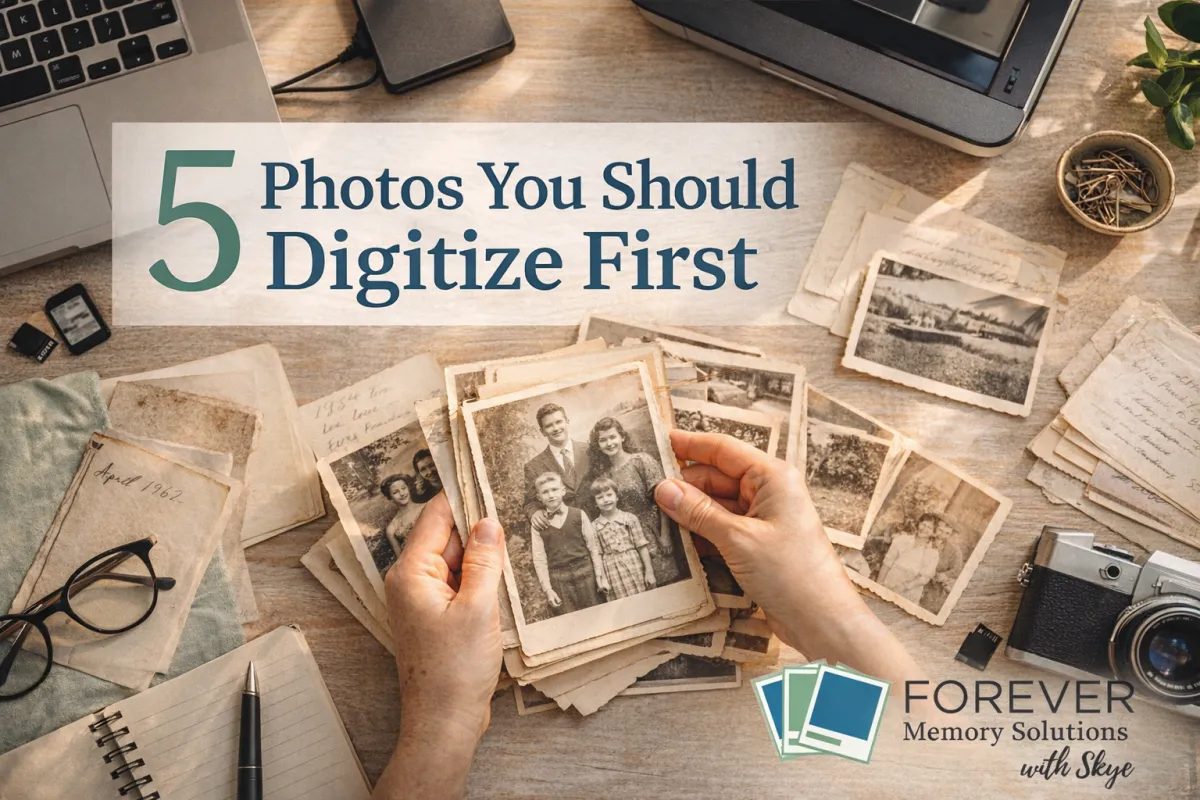
5 Photos You Should Digitize First to Protect Your Family Memories
If you’ve ever looked at your photo boxes, albums, or drawers and thought, “I really need to digitize these someday,” you’re not alone.
Most people have thousands of family photos and no idea where to start. The good news is that you don’t have to digitize everything at once. In fact, starting small is often the best approach when it comes to photo organization and photo digitization.
Instead of trying to tackle your entire collection, begin with the photos that matter most or are most at risk. Digitizing old pictures protects your family history and helps ensure those memories are preserved for generations.
If you’re wondering where to start, here are five types of photos that are great candidates to digitize first.
1. The Oldest Photos in Your Collection
The oldest family photos in your collection are often some of the most valuable.
These might include photos of great-grandparents, early family homes, or gatherings from generations past. Many of these images exist in only one physical copy, and some may already be fading or becoming fragile.
Scanning old photos and converting them to digital files preserves them before more damage occurs and helps ensure they can be shared with future generations.
If you’re unsure where to begin with old photo preservation, starting with the oldest generations in your collection is a great first step.
2. Photos That Only Exist in One Copy
Many families have photos that exist in only one place — a loose print in a box, a photo passed down from a relative, or a picture that was never duplicated.
These images are some of the most vulnerable in your collection. If something happens to that single print — a flood, fire, or even simple deterioration — the photo and the memory it represents may be lost forever.
Digitizing these photos is the first step in creating a secure backup and helps protect your family memories.
3. Photos That Tell Important Family Stories
Some photos capture moments that define your family’s story.
These might include wedding photos, military service photos, immigration stories, or major milestones in your family’s history. These images often become key pieces of preserving family history and are especially meaningful for genealogy research.
When you digitize these photos, it’s also a great time to write down the stories behind them — who is in the photo, where it was taken, and why it matters.
Those details turn photos into lasting family history.
4. Photos That Are Fading or Damaged
Photographs don’t last forever.
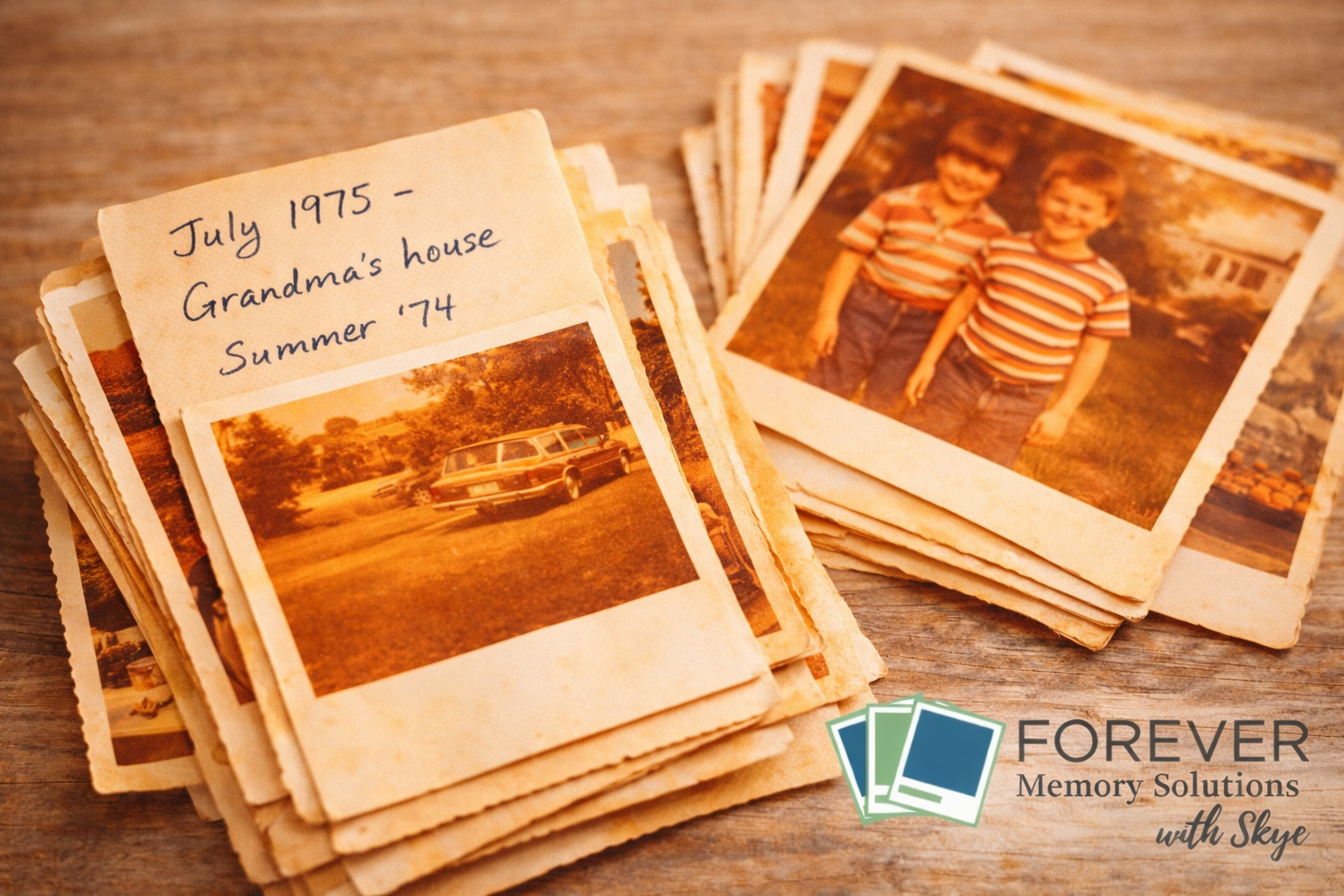
Over time, prints can fade, discolor, tear, or become stuck in old magnetic albums. Once damage begins, it often continues to worsen.
Digitizing old photos now captures the image while the details are still visible. Even if the original photo continues to age, the digital version helps preserve the memory.
If you notice photos that are already fading or fragile, those are excellent candidates to prioritize.
5. Photos You Want to Share with Family
Some photos simply mean a lot to the people you love.
They might be childhood photos, pictures of grandparents, or images that relatives always ask to see. These photos are often the ones that bring families together and spark meaningful conversations.
Once photos are digitized, they are much easier to store safely, share with family members, and use in photo books or family history projects.
Sometimes the best photos to start with are simply the ones you know your family treasures most.
Getting Started (Without the Overwhelm)
If organizing and digitizing photos feels like a huge project, remember that you don’t have to do everything at once.
Try starting with something small:
• Choose 10 photos from one of the categories above
• Scan or digitize them
• Save them somewhere safe
• Add names, dates, or stories if you can
Small steps add up over time, and each photo you preserve helps protect your family memories.
Want Help Getting Started?
If you’d like help organizing your photos, preserving old family photos, or deciding what to digitize first, I have a couple of opportunities coming up.
Photo SOS Class - March 24
Learn practical steps for organizing your photos and creating a plan for digitizing and protecting your family memories.
Register here:
https://events.hometownticketing.com/boxoffice/dsd/L2VtYmVkL2V2ZW50LzM3OQ%3D%3D
FOREVER® Genealogy Group – March 21
In this session, we’ll talk about how photos connect to family history and how they can support genealogy research.
Register here:
https://www.forever.com/ambassador/skyecranor/events/GENEALOGY_GROUP_EVENT-MARCH_2026
Your photos hold your family’s stories.
Preserving them doesn’t have to happen all at once. Start with the images that matter most, and build from there.
If you’d like help digitizing photos or creating a safe system for storing them, I’d love to help. 💙