

The Everyday Photos That Tell Our Story
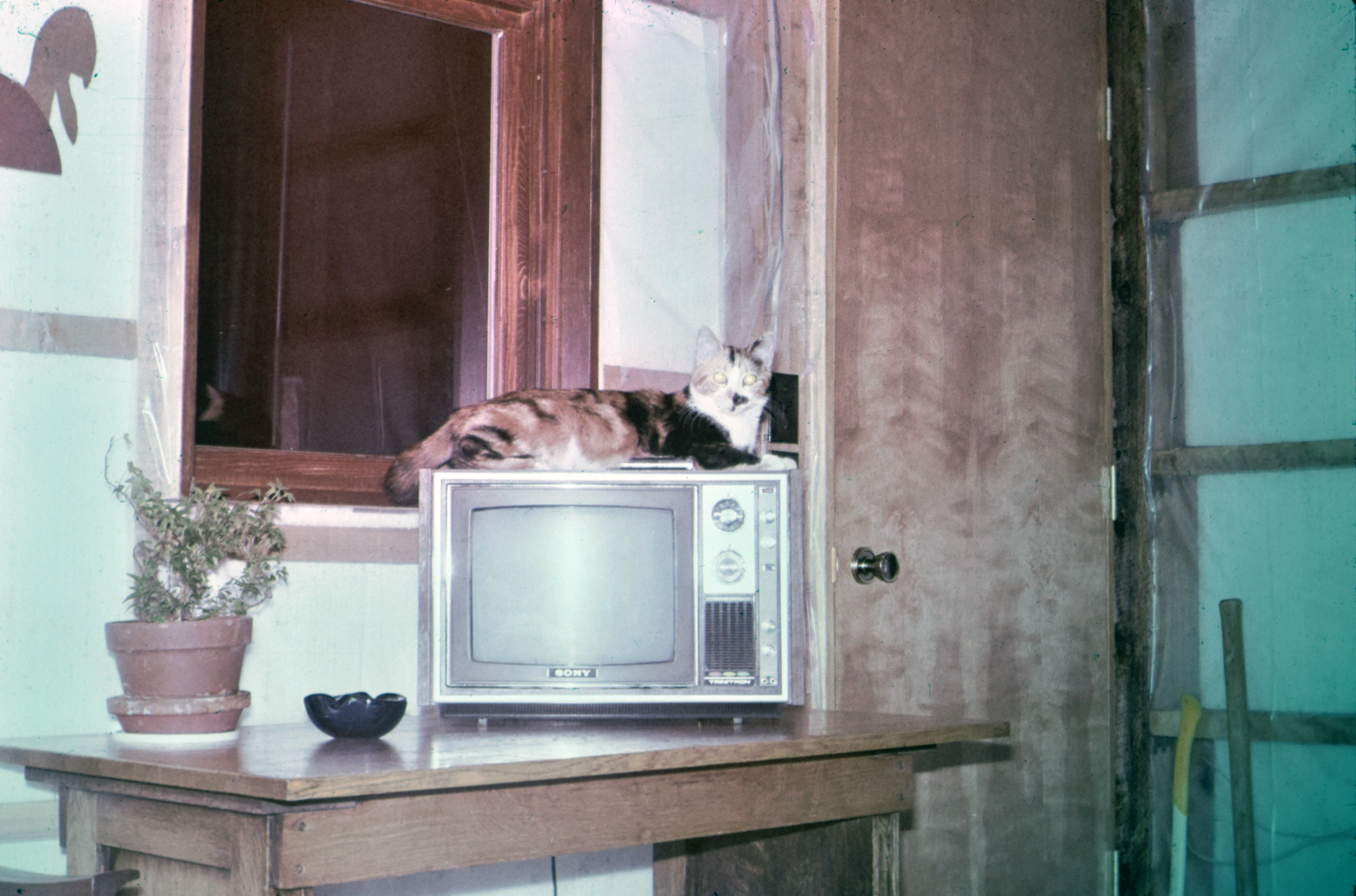
I love this old picture of our cat.
She used to sleep on top of the television. I'm pretty sure she liked it because the TV was warm.
At the time, that was probably the whole reason my mom or dad took the picture: the cat was sleeping on the TV.
But nearly 50 years later, I'm fascinated by the TV, too.
Look how small it is compared with the enormous screens we have today. Look at the cabinet, the knobs, and everything around it. None of that seemed particularly worth documenting in 1977. It was simply our television.
But now it's history.
And then there's this picture.
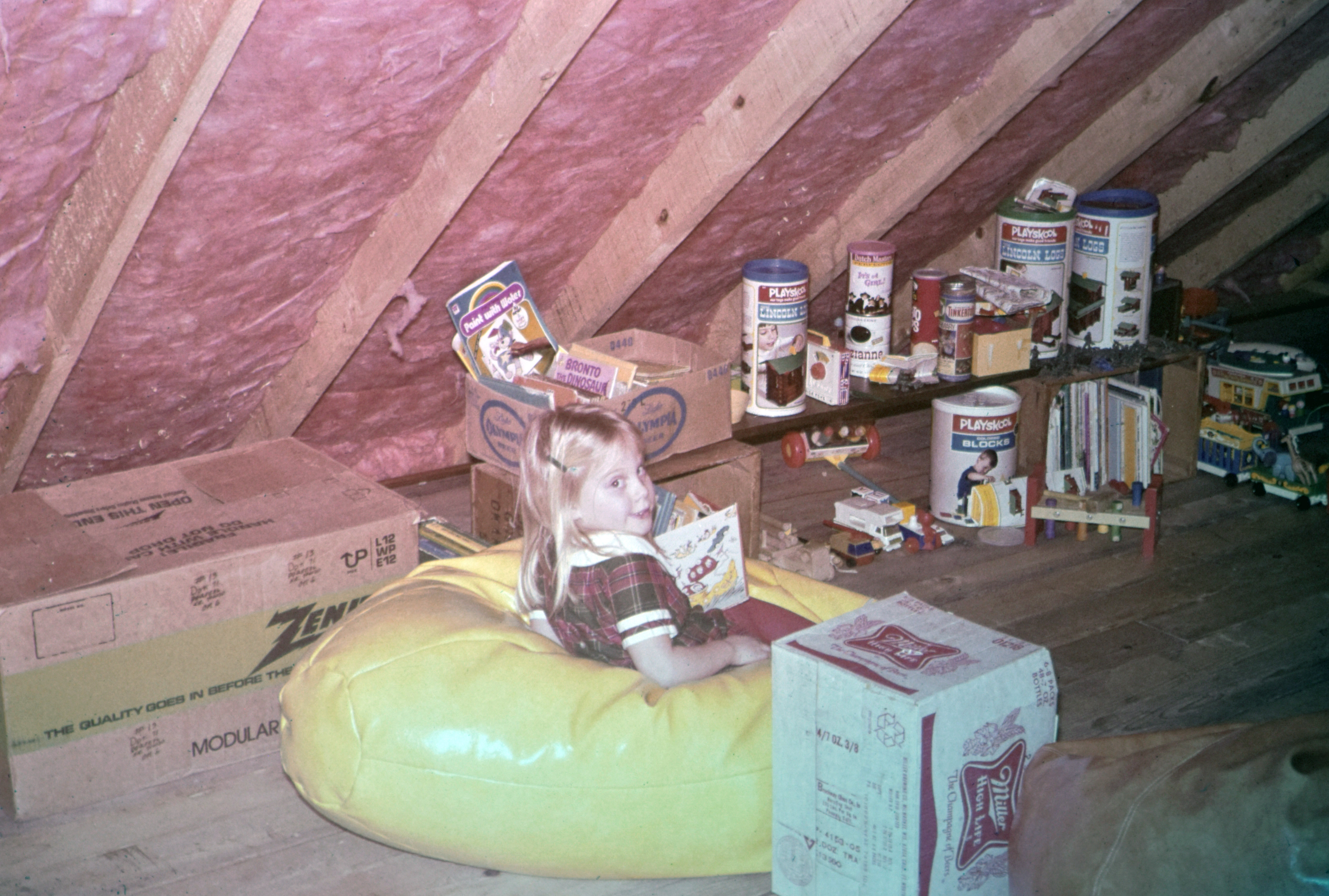
That's me, the little girl sitting in the beanbag. But once again, what interests me now isn't just the person in the picture. It's the room around me.
At the time, my dad was building the house I would grow up in. We initially lived in what would eventually become the garage while he worked on the rest of the house.
We heated that space with a wood stove. We cooked on it, too. My mom even heated water on the stove to wash the dishes.
Eventually, Dad added the upstairs. For a while, it was divided into my parents' room and a room for the kids while more of the house was completed. This picture was taken in the kids' room.
None of this felt historic to me.
It was simply my life.
And that's what makes everyday photos like these so valuable today.
They didn't document a birthday, a vacation, or some important family milestone.
They documented an ordinary day.
The Ordinary Things Become Interesting
Think about the old family photos you love looking at.
Of course, you look at the people.
But what else do you look at?
The furniture in the room.
The dishes on the table.
The wallpaper.
The cars parked along the street.
The toys on the floor.
The clothes hanging on the line.
The signs on the buildings.
The appliances in the kitchen.
Those things probably weren't the reason someone took the picture.
But decades later, they become part of the story.
That's one of the reasons I think it's important to photograph everyday life, not just the special occasions.
The things that feel completely ordinary to us today may be fascinating to someone 20, 50, or 100 years from now.
What Would You Love to See?
Imagine you could spend an ordinary Tuesday afternoon in your grandmother's home when she was your age.
What would you want to see?
I'd want to see her kitchen.
What dishes did she use every day? What was in her pantry? What kind of refrigerator did she have? What was sitting on the counter?
I'd want to see where she did the laundry. Did she have a washer and dryer? A wringer washer? Did she hang everything outside?
I'd want to see the family car—not just posed beside it for a special picture, but what it looked like inside.
I'd want to see the grocery store where she shopped, the street she drove down, the chair she sat in at the end of the day, and what was sitting on her nightstand.
I'd love to see the things she saw and used every single day.
None of those things sound particularly historic when you're living with them.
But that's exactly the point.
Everyday life becomes family history.
We Tend to Photograph the Exceptional
Most of us are pretty good at pulling out our cameras when something important happens.
Birthdays. Weddings. Graduations. Vacations. Christmas morning. First days of school.
Those photographs absolutely matter.
But if those are the only pictures we take, we're leaving out an enormous part of our family story.
Most of life isn't a birthday or vacation.
It's making dinner.
Driving to work.
Packing lunches.
Walking the dog.
Doing laundry.
Sitting at a desk.
Picking up groceries.
Working in the yard.
Watching television at the end of the day.
Those routines may not feel photo-worthy because they're so familiar.
But familiar doesn't mean insignificant.
Taking everyday family photos gives future generations something that formal portraits and milestone photographs can't: a glimpse of what it actually felt like to live our lives.
Don't Clean Everything Up First
There's another way we sometimes accidentally erase the very details we're trying to preserve.
We clean them up.
Maybe you're photographing your child doing homework at the kitchen table. Before you take the picture, you move the backpack, clear the papers off the refrigerator and push the cereal box out of sight.
But 25 years from now, those might be some of the most interesting parts of the photograph.
That backpack may be instantly recognizable to your child.
Those papers on the refrigerator may show what they were learning in school.
That cereal box may have disappeared from grocery stores decades ago.
The laundry basket in the corner, pile of shoes by the door, toys scattered across the floor or dishes drying beside the sink aren't necessarily ruining the picture.
They're documenting your life.
There's certainly a place for beautiful photographs.
But there's also a place for honest ones.
Photograph the Things That Will Change
Technology is an especially good example.
Just look at that television in my cat picture.
At the time, there was absolutely nothing historic about it. Today, it's one of my favorite details.
Think about how quickly our everyday objects change.
Rotary phones became cordless phones. Cordless phones gave way to cell phones. Televisions changed. Computers changed. Cameras changed. Cars changed.
Even our kitchens and laundry rooms look different.
So what everyday photos should you take?
Photograph your phone.
Photograph your computer setup.
Photograph your car dashboard.
Photograph your kitchen.
Photograph your washer and dryer.
Photograph your children's favorite toys.
Photograph what's inside your refrigerator.
Photograph your grocery cart.
Photograph the gas station sign with today's prices.
Photograph the view down your street.
Not because every photograph will someday become precious.
But because we don't always know which ordinary details we'll someday wish we could see again.
You Are Someone's Family History
When we talk about family history, it's easy to think backward.
We research our grandparents and great-grandparents. We look for their photographs and records. We ask questions about how they lived.
But someday, we will be the ancestors.
Someone may wonder what our homes looked like.
What we ate.
How we spent our days.
What technology we used.
What our neighborhoods looked like.
What we drove.
What we wore when we weren't dressed up for a picture.
The everyday photos we're taking now can answer questions future generations haven't even thought to ask yet.
And here's something else to remember:
You should be in some of those pictures, too.
Don't let the photographic record of your family's everyday life make it look as though you weren't there simply because you were always the one holding the camera.
Add the Story While You Know It
Looking at my childhood pictures today, I'm fortunate that I know the stories behind them.
I know why our cat was sleeping on the television.
I know that the room in some of those photographs would eventually become the garage.
I know my dad was building our house around us.
I know about the wood stove and my mom heating water on it to wash the dishes.
But a photograph can't tell someone all of that by itself.
That's why preserving family memories means more than keeping the picture. When you can, add a little context.
Names. Dates. Places. And, most importantly, the story.
It doesn't need to be a beautifully written essay.
A few sentences may be enough:
This was around 1977, while Dad was building our house. We were living in what would eventually become the garage. That's our cat sleeping on top of the TV—probably because it was warm.
Suddenly, a funny picture of a cat becomes part of a much bigger family story.
This Week's Memory-Keeping Challenge
Take five pictures of ordinary life this week.
Not special occasions.
Not posed portraits.
Look for things you normally wouldn't think were worth photographing.
Your kitchen on a weekday morning.
The place where you work.
Your laundry room.
What's sitting on your nightstand.
The view when you pull into your driveway.
Your favorite chair.
Your car.
Your grocery cart.
The shoes piled by the door.
And take at least one photograph that includes you in your ordinary environment.
Then add a date and a sentence or two about what you're seeing.
You may look at those pictures next week and think they're nothing special.
That's okay.
My family's television wasn't anything special in 1977 either.
Almost 50 years later, I'm very glad someone took the picture.
Today's ordinary is tomorrow's family history.