
What Do You Wish You Had Asked Your Grandparents?
Not long before my grandfather died, I had the opportunity to sit down and interview him.
I asked questions about his life and our family, and I recorded his answers. At the time, I knew the stories were important. But today, I'm especially grateful that I didn't simply write down what he told me.
I recorded his voice.
In one of those recordings, I asked my grandfather, Bob, how he met my grandmother, Wid.
It was during World War II in Long Beach, California. Wid was serving in the WAVES, and Bob was in the Navy. She was a Link Trainer instructor, working with the flight simulators used to train pilots.
Bob would go over to the building where she worked and, as he put it, “heckle” her.
I love that detail.
I could write down the basic facts: Bob was in the Navy. Wid was in the WAVES. They met in Long Beach during World War II.
Those facts are important.
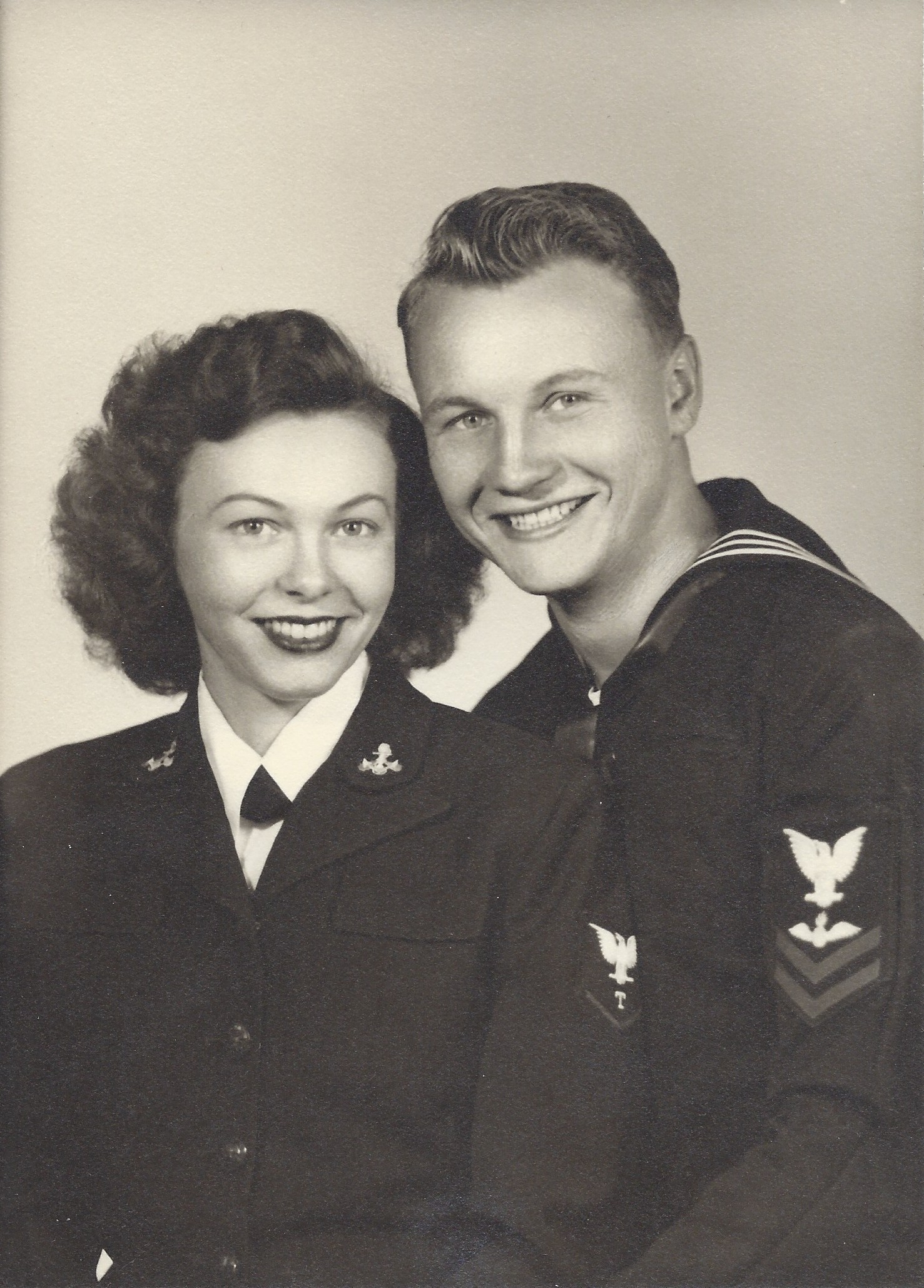
But “I used to heckle her” tells me something different.
It gives me a glimpse of my grandfather as a young man. I can imagine a side of him I never knew personally. And it tells me something about the beginning of a relationship that eventually became part of my own family story.
Best of all, I don't have to rely on my memory of hearing him tell it.
I can still hear him tell it himself.
There Are Always More Questions
My grandfather died shortly after I interviewed him.
Today, I can think of so many questions I'd love to ask him.
I can't.
But I am incredibly grateful for the questions I did ask, and for the answers I preserved in his own voice.
And it makes me wonder:
What do you wish you had asked your grandparents?
If you're fortunate enough to still have a grandparent or older relative you can talk with, you may wonder what questions to ask your grandparents about their life or how to begin recording their stories. It doesn't have to be a formal family history interview. Often, one simple question is enough to begin.
Not necessarily the big family-history questions, either.
Sometimes the things I wish I knew are the ordinary things.
What did you do after school?
What did your kitchen look like when you were growing up?
What did you spend your money on?
Who were your best friends?
What did you do for fun on a Saturday?
What did you get in trouble for?
What did you think you would be when you grew up?
What was your mother like when no one else was around?
Those details rarely appear on a pedigree chart. But they're often the things that help us feel like we actually know the people who came before us.
Records Give Us Facts. People Give Us Stories.
I love genealogy. Records can tell us an incredible amount about our families.
A military record might document that my grandfather served in the Navy and my grandmother served in the WAVES.
But it isn't going to tell me that Grandpa used to go over to Grandma's building to heckle her while she was working.
A marriage record can tell us when two people married, but not what first attracted them to each other.
A census can tell us where someone lived, but not which room everyone gathered in or what was always cooking in the kitchen.
A photograph can show us what someone looked like, but it can't tell us what made them laugh.
That's where the stories come in.
And so many of those stories exist only in someone's memory.
Family History Questions to Ask Your Grandparents
Sometimes “interviewing” someone sounds intimidating. But good family history interview questions don't have to be complicated. You don't need a list of 100 questions, special equipment, or a formal appointment.
You don't.
Some wonderful family stories begin with a simple question:
“What was Christmas like when you were little?”
“Tell me about your first car.”
“What did your family eat for dinner?”
“Did you ever get in trouble at school?”
“How did you meet Grandma?”
Then listen to the answer—and listen for the next question.
If Grandpa mentions walking to school, how far did he walk?
If Grandma talks about helping her mother make dinner, what did they cook?
If someone mentions a neighbor, teacher, sibling, job, house, or tradition you've never heard about, ask about it.
That's how you get from:
They met during World War II.
to:
He used to go over to her building and heckle her.
The little details are often where the person comes alive.
And It Doesn't Have to Be a Grandparent
Maybe your grandparents are no longer living.
That doesn't mean the opportunity is gone.
Who in your family knows the stories?
Maybe it's an aunt who remembers all the cousins and where everyone lived.
Maybe it's an older sibling who remembers things about your childhood that you don't.
Maybe your dad knows why your family has always followed a certain tradition.
Maybe your mom remembers stories about her grandparents that no one has ever written down.
And perhaps you've reached the point where you're the person who knows some of the stories.
The things we assume “everyone knows” can disappear surprisingly quickly when the person who remembers them is no longer here to tell them.
Record Your Grandparents' Stories—and Their Voices
Last week, I wrote about an old home movie my dad made in 1986 and how much I treasure hearing his younger voice as he takes us through the house he built.
That voice was preserved almost accidentally. He wasn't making the video because he thought I would someday want a recording of the way he sounded.
My grandfather's voice was different.
I intentionally recorded it.
I'm grateful for both.
Today, recording a conversation can be as simple as using the voice recorder or camera on your phone.
Of course, you can write down someone's answers, too. Written stories are valuable.
But when you can, capture the voice.
Someday the pauses may matter.
The laugh may matter.
The expressions they use may matter.
The way they say a familiar name may matter.
The story matters. But the storyteller is part of the memory, too.
Once you've made that recording, don't let it become another mystery file sitting on a phone or computer.
The best way to preserve a family story is to record the person's voice or video when possible, save the recording with names, dates, and context, and store it somewhere your family can find and access in the future.
Give the file a meaningful name. Add the person's name, the date of the recording, and information about what they're discussing. Then keep it somewhere it can be preserved, organized, found, and shared with the people who will treasure it someday.
I keep my grandfather's recordings in my FOREVER account, along with the photos and other memories that help tell his story. That way, they're not simply saved—they're connected to the people and stories they belong to and preserved for my family.
This Week's Memory-Keeping Challenge
Think about someone in your family whose stories you would hate to lose.
What is something you've always wanted to ask them?
Ask.
And when they answer, listen for the next question.
If the person you wish you could ask is no longer here, talk to someone else who knew them. Ask siblings, cousins, aunts, uncles, or longtime friends what they remember. Write down your own memories, too.
You may discover that everyone is carrying a different piece of the story.
I'm so grateful I asked my grandfather some of those questions while I still could.
I can't call him today and ask what else he remembers.
But I CAN press play and hear him answer.
And that is a gift I'm very glad I preserved.